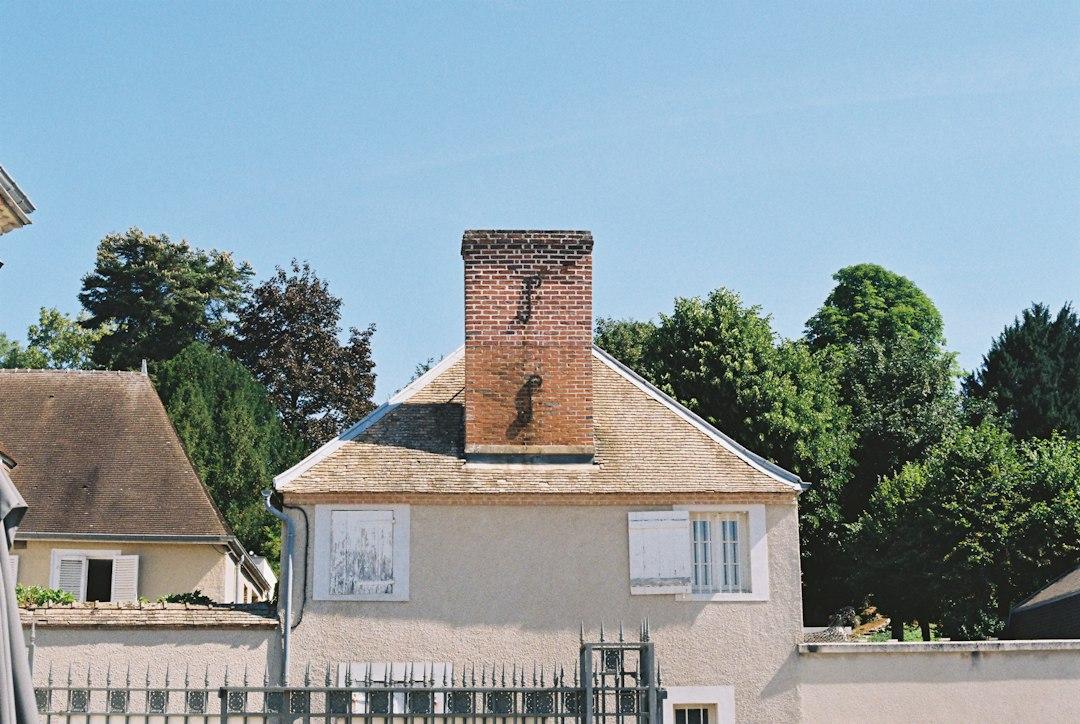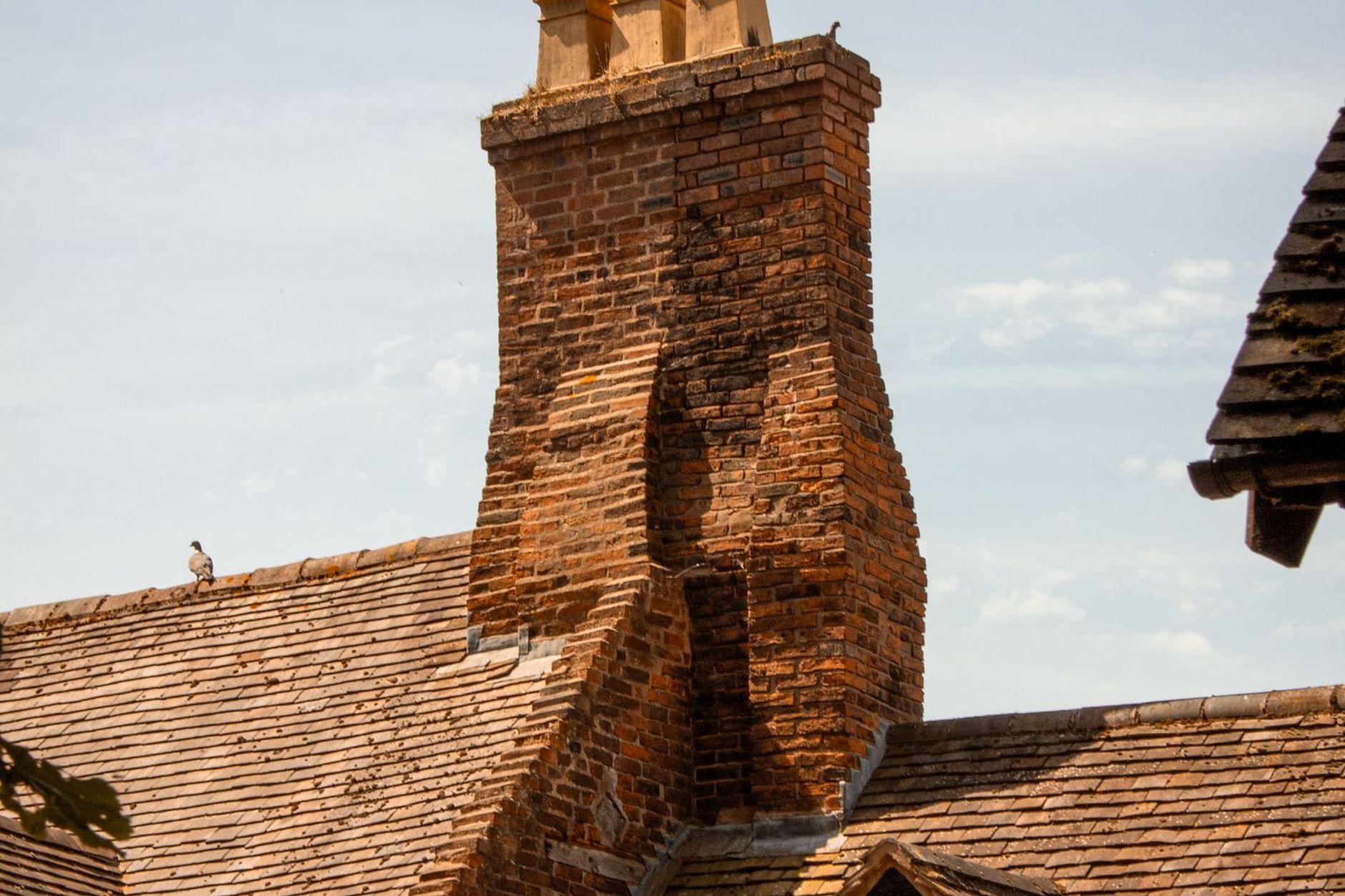

The first rain of the season in Pomona tends to find every weak spot on a roof, and the spot where a brick chimney meets the shingles is near the top of the list. Owners notice a brown ring on the ceiling, a damp patch beside the fireplace or a drip onto the hearth. This guide covers what we charge to find and fix a chimney leak, when a small roof diverter behind the chimney is part of the answer, and what to ask anyone before they start pulling metal.
Our prices
| The job | Installed price |
|---|---|
| Tracing a chimney leak to its source and fixing it | $585 to $3,500 |
| A sloped diverter on the roof side of a wide stack | $470 to $1,060 |
| That diverter together with new metal all around the chimney | $705 to $1,750 |
Replacing the metal around a chimney without a diverter, resealing a crown or fixing a cracked flue each depend on the chimney, so we give a written figure after seeing it.
Where the water usually gets in
A chimney leak often looks like a roof leak, and roofers often treat it as one. In practice the water comes from one or more of these:
- The metal at the roofline. Two layers of metal close the joint between brick and roof. The lower layer is woven into the shingles; the upper layer is set into a mortar joint in the brick and laps over it. When the upper layer pulls out of its joint, or the sealant along it dries and splits, water runs behind.
- The uphill side. On a wide chimney, rain and debris collect against the brick on the high side of the roof, and water backs up under the shingles.
- The crown. A cracked mortar top lets water into the brick from above.
- The flue opening. Without a cap, rain falls straight in.
- The brick itself, if the mortar joints have worn back.
Where animals come into it
This is a chimney company that spends a lot of its time on critters, so here is the link most people miss. Raccoons climb chimneys, and the upper metal is a handy foothold. A raccoon that hauls itself up the stack a few nights a week will bend that metal away from the brick. Squirrels and birds pick at soft sealant. And a missing cap that let birds in also lets rain in. When we trace a leak in Pomona, it is not unusual to find the metal bent outward on the side nearest a tree or fence the animals use as a ladder.
What moves a leak job within its range
- How many sources there are. One open joint is quick. Water coming in at the metal, the crown and an open flue at once is a bigger job.
- How wide the chimney is. Wider stacks have more metal and, past a certain width, need a diverter on the uphill side.
- The roof. Composition shingles are simple to work under. Clay tile, common in older Pomona neighborhoods, takes more care to lift and relay.
- What the water has already done. Soft decking or framing beside the chimney has to be repaired before new metal goes on.
How we trace it
We go into the attic where there is access and follow the stain back to where the water first appears. On the roof we look at each likely source in turn: the metal on all four sides, the uphill side, the crown and the flue top. Where it is not clear, we test sections with water, one at a time, so the source is confirmed rather than guessed. You get a short written summary of where the water came in, with photos, and a scope that prices each fix.
When the next step is a quote
If you can see a stain and know roughly which side of the chimney it sits on, that is enough to start. Request a leak visit and describe where the water shows inside, how long it has been happening and whether you have noticed animals around the roof. We will tell you what the visit covers and what it costs before we come.
The diverter behind the chimney
The residential code asks for this diverter on any chimney more than 30 inches across where it meets the slope. It is a little peaked roof of its own, built against the high side of the brick so rain is turned off to the left and right instead of pooling. Many older Pomona houses were built without one. If yours is wide, sits across the slope and leaks on the high side, the diverter is usually part of the fix. On its own it runs $470 to $1,060. Because new metal around the chimney has to tie into it, many owners do both together for $705 to $1,750.
Questions worth asking before you hire
- Will you find the source before you start sealing? A bead of caulk over the wrong joint buys a dry month at most.
- Will the upper metal be set into a cut mortar joint, or glued to the face of the brick?
- Do you check the crown and the flue top as well as the roofline?
- Is the diverter included if my chimney is wide enough to need one?
- Will I get photos of what you found and what you did?
Do it before the next storm, not during it
Leaks are hard to fix in the middle of the wet season: roofs are slick, mortar cures slowly and the damage indoors keeps growing. The months before the first winter storm are the comfortable time to have the chimney looked at. If a ceiling ring has already appeared, get the trace done at the first dry spell rather than waiting for spring.
Related reading
Our flashing repair and leak repair pages give more detail on the work itself. If the water comes from an open flue, our cap price guide covers the fix. On a sided chimney box rather than brick, see chase cover gaps.
We trace chimney leaks across Pomona, Claremont, La Verne and Riverside. If there is a ring on your ceiling, reach us through the contact page and we will find out where it starts.
Something Nesting in Yours?
Leave the fire out for now. Sloane Chimney Care works out of Pomona, clears the flue, closes the way in and leaves you photos of both.